Agent Frank (by Salesforge)
Best for: Advanced AI personalization
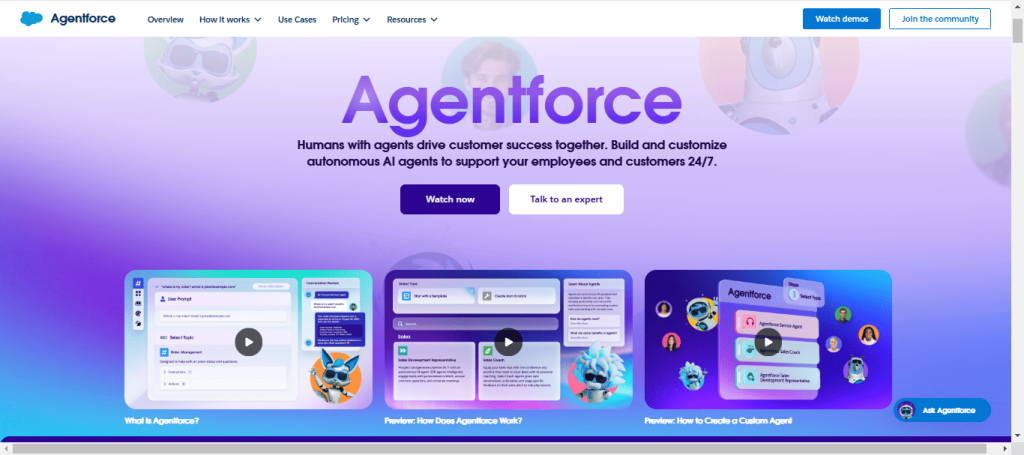
Stands out for:
- More adaptable AI learning
- Transparent pricing
- Enhanced personalization capabilities
- Simpler user interface
Many users report smoother AI-driven personalization compared to Artisan’s Ava.
Apollo.io
Best for: Data-rich prospecting
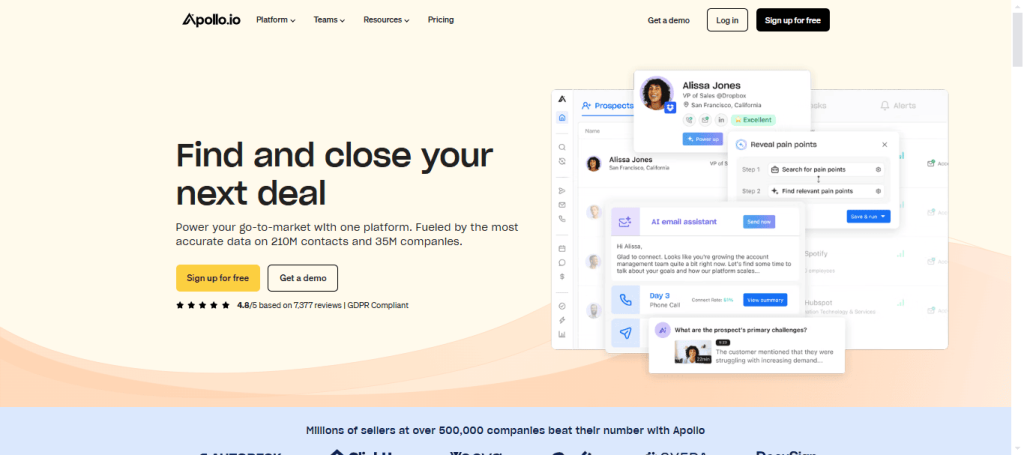
Notable features:
- Massive B2B database
- Built-in intelligence tools
- Competitive pricing
- Strong integration ecosystem
Particularly strong if data accuracy and prospecting capabilities are your priority. You can read our full guide on alternatives here.
Outreach
Best for Enterprise sales teams
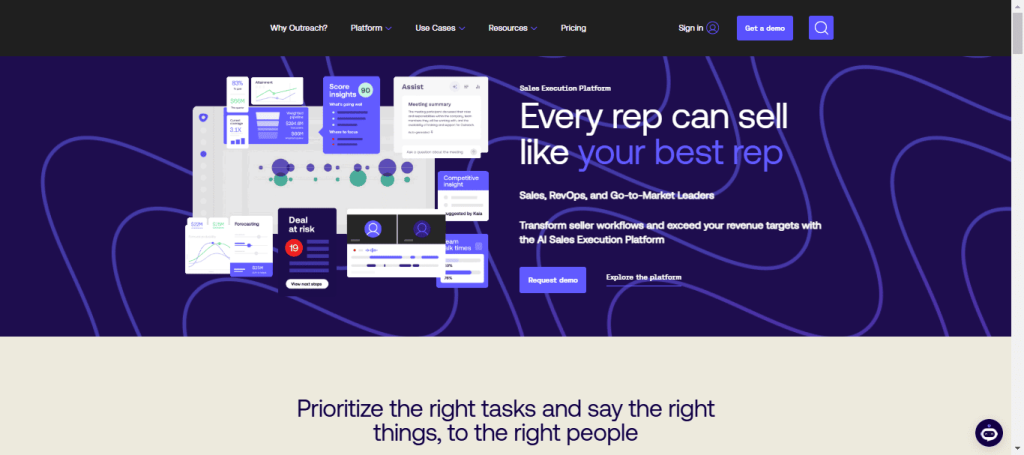
Key strengths:
- Comprehensive sales engagement
- Advanced analytics
- Revenue intelligence
- Enterprise-grade security
While pricier, it offers more robust features for larger teams.
Price comparison
| Platform |
Starting price |
Lead capacity |
Key feature |
|
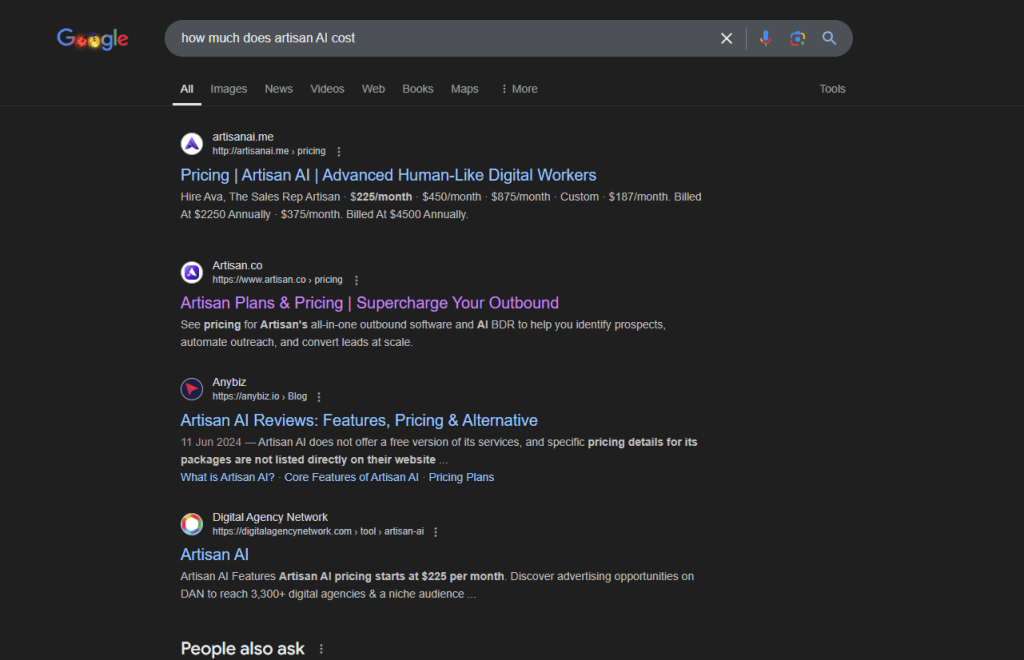
Artisan AI
|
$225/month |
750 leads |
AI-powered BDR
|
| Reply.io |
$259/month |
1,000 leads |
AI SDR + Multichannel + 1 Billion Live Data |
| Agent Frank |
$199/month |
1,000 leads |
Advanced AI |
| Apollo.io |
$59/month |
1,500 leads |
Data quality |
| Outreach |
Custom |
Unlimited |
Full platform |
Consider these factors when evaluating alternatives:
- Budget vs. Features
- Team size and needs
- Integration requirements
- Automation priorities
- Support requirements
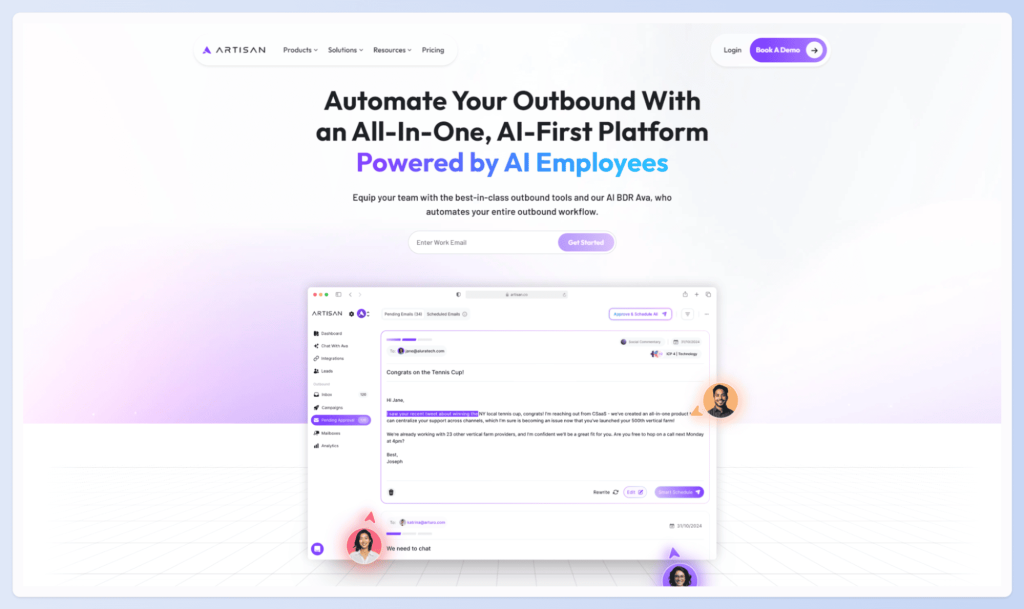
💡 Selection tip: Most of these platforms offer free trials. Take advantage of these to test-drive multiple solutions before committing. Pay special attention to email deliverability rates and AI writing quality during your trials.
How to choose your AI sales assistant
After reviewing Artisan AI company and its alternatives in depth, let’s tackle the big question: how do you actually choose the right AI sales assistant for your business? I’ll break this down into a practical framework you can use for your decision.
Here’s a practical, conversational approach to making the best choice.
1. Understand your needs
Start by being clear about where your sales team could use the most help. Think about the pain points you’re experiencing. For instance, is your team struggling to qualify leads quickly, keep up with follow-ups, or analyze sales performance?
For example, if you’re spending hours on repetitive tasks like lead sorting, an AI tool that automates this process can free up time for your team to focus on closing deals. Or, if follow-ups are inconsistent, an AI assistant that sends personalized outreach at the right moment could be a game-changer.
A simple way to begin is by jotting down three key tasks your team struggles with. These will become your guiding priorities.
2. Look for key features
Once you know what you need, think about how the AI can meet those needs. The best tools should:
- Be easy to use and integrate with your current systems, like your CRM or email platform. For example, if you use Salesforce, an assistant that works seamlessly within it will save you time and headaches.
- Feel human when reaching out to leads. Instead of sending generic emails like, “Hello, we’d like to work with you,” it should be capable of crafting personalized messages, such as “Hi Alex, I noticed your company recently expanded in the logistics space…”
- Provide insights you can act on, such as identifying which leads are the most engaged or forecasting upcoming trends in your pipeline.
Imagine you’re choosing between two tools: one offers basic automation, and the other gives you clear, actionable suggestions. Always prioritize the one that helps you make smarter decisions.
3. Check compatibility
Even the best AI assistant won’t work for you if it doesn’t fit your team’s workflow. Ask yourself:
- Does this tool work with what we already have, like our CRM, email platform, or analytics software?
- Will my team actually use it, or will it feel like extra work?
For example, if your sales team is already stretched thin, a tool that requires constant manual input may cause frustration. Instead, look for an assistant that works quietly in the background, simplifying tasks rather than adding to them.
4. Do your homework
Before committing, spend some time reading reviews and trying out the tools. Sites like G2 and Capterra can give you real-world insights into what others have experienced. Look for patterns in the feedback—if many users praise the tool’s simplicity and customer support, that’s a good sign. If multiple people mention issues like glitches or poor integration, take note.
Most AI sales tools offer free trials or demos. Use these to see how well the tool aligns with your needs. For instance, try automating one task, like sending follow-up emails, to gauge its effectiveness before expanding its role.
5. Think long-term
An AI sales assistant isn’t just a quick fix; it’s an investment in your team’s future. Choose a tool that will grow with your business. Does it offer regular updates? Is the company innovating and staying ahead of trends, like using generative AI for better outreach?
Consider the scalability too. You may only need basic features now, but as your team grows, you’ll want advanced analytics, multi-channel outreach, and other capabilities.
A practical example (to make it clear as the sky)
Let’s say your sales team struggles with following up on leads. You could start with an AI tool that automatically sends personalized follow-up emails based on user behavior, such as website visits or email opens. Over time, you might expand its use to qualifying leads or analyzing your pipeline. By starting small and building gradually, you’ll see results without overwhelming your team.
Remember: The “best” tool isn’t always the most expensive or feature-rich – it’s the one that best fits your specific needs and constraints.
Is Artisan AI right for you?
Artisan AI company offers impressive features and a compelling vision of AI-powered sales outreach. However, it’s crucial to remember that no single tool is universally “good” or “bad.”
The real question is whether it aligns with YOUR specific needs, resources, and long-term goals.
Consider these key factors:
- Team adoption: Artisan AI requires a learning curve and ongoing optimization. Ensure your team is willing to invest the time and effort needed for success.
- Resource commitment: Beyond the monthly cost, factor in setup time, training, and potential integration expenses.
- Customization needs: While Artisan AI offers personalization, it may not suit businesses with highly specialized or niche markets requiring extensive customization.
Ultimately, the best sales tool is one that seamlessly integrates into your workflow, empowers your team, and delivers a positive ROI.
Looking for a platform with a proven track record in multi-channel engagement and transparent pricing?
Explore Reply.io and see if it’s a better fit for your sales outreach needs.





![The Ultimate Email Deliverability Toolset for 2026 [15+ Tools]](https://test.reply.io/wp-content/uploads/deliverability-300x158.jpg "The Ultimate Email Deliverability Toolset for 2026 [15+ Tools]")