ScienceLogic
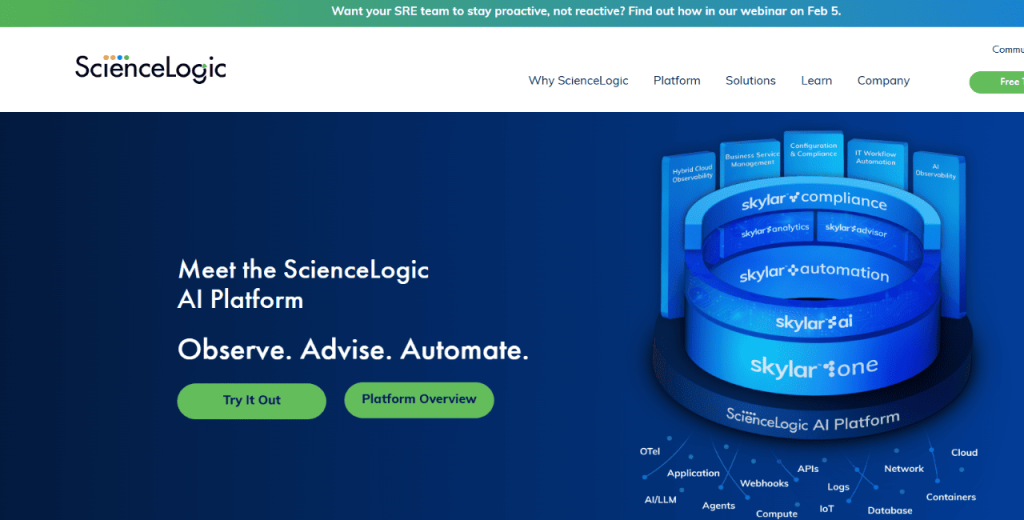
ScienceLogic is basically your central nervous system for AIOps and observability across cloud, on-prem, and all the hybrid chaos in between. Instead of staring at 10 different monitoring tools, you get one view that understands how everything is connected and what actually broke.
It uses AI-driven event correlation and dynamic topology mapping to collapse thousands of alerts into a few real issues and point you to the most likely root cause. From there, you can trigger automated remediation workflows or route the incident to the right owner with all the context attached — not just “server down” noise.
End result? Fewer surprise outages, faster recovery, and more uptime for revenue-critical systems like your CRM, dialers, and data pipelines — the stuff you really can’t afford to lose, especially mid-campaign.
Splunk ITSI
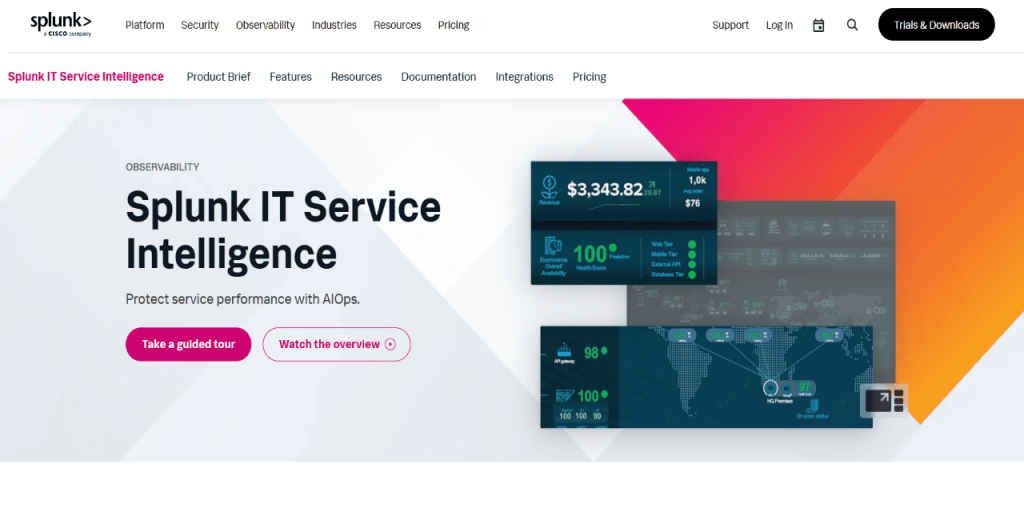
Splunk IT Service Intelligence (ITSI) basically takes all the data you’re already pumping into Splunk and adds an AIOps brain on top of it. Think service health instead of random metrics.
It pulls in logs, metrics, and traces, then correlates events and uses anomaly detection and predictive analytics to flag issues before users start screaming in Slack. On top of that, ITSI’s service health scores show you which services are actually at risk and how bad it is, so you focus on what matters to the business, not just whoever is loudest.
For sales orgs, that means keeping Salesforce, outreach tools, dialers, and comms platforms stable, with fewer “sorry, our system is down” moments and less time firefighting in the middle of peak hours.
eG Innovations
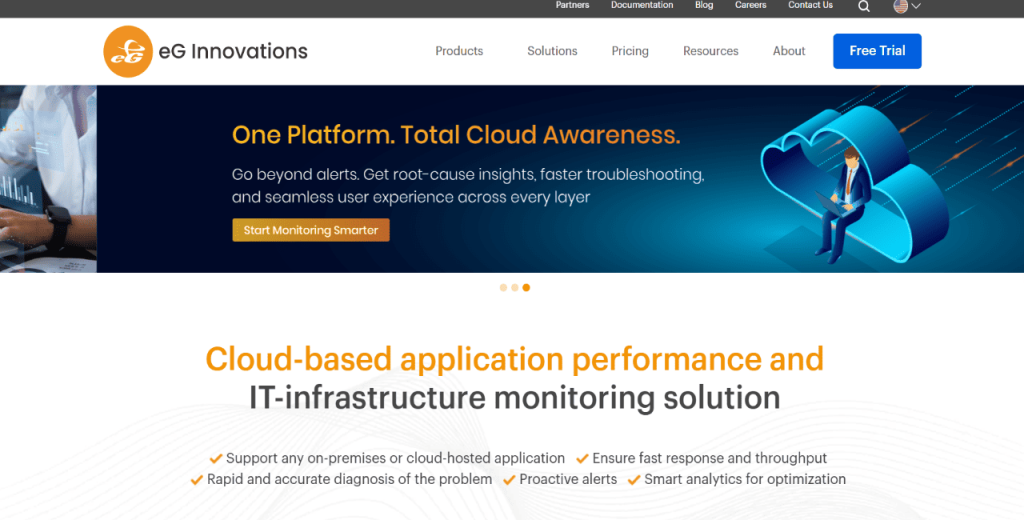
eG Innovations is a full-stack observability platform that doesn’t stop at pretty dashboards, it’s built to answer the “where’s the actual problem?” question end to end. From user experience down to apps, infra, virtualisation, and third-party services, everything sits in one view.
Their AIOps layer handles automatic dependency mapping, anomaly detection, and guided root-cause analysis, so teams don’t waste hours guessing if it’s the app, the network, the hypervisor, or that one third-party API acting up again.
The practical upside is that when your CRM, marketing automation, or calling tools slow to a crawl under load, you can quickly prove where the bottleneck really is and fix it before it turns into a full-blown sales outage.
PagerDuty
PagerDuty is the operations nerve center that turns scattered monitoring alerts into a coordinated incident response. Instead of every team getting spammed with the same noise, PagerDuty ingests signals, enriches them, groups related alerts, and only wakes up the right people when it actually matters.
On-call routing, escalations, and runbooks are all baked in, so once something breaks, the workflow is already defined — who gets paged, what they see, and what they do next. You standardize remediation instead of improvising every incident from scratch.
For sales ops, that means shorter downtime for core systems like your CRM, calling stack, and messaging platforms, and less revenue leaking away because the team can’t dial, log activity, or move deals forward.
Dynatrace
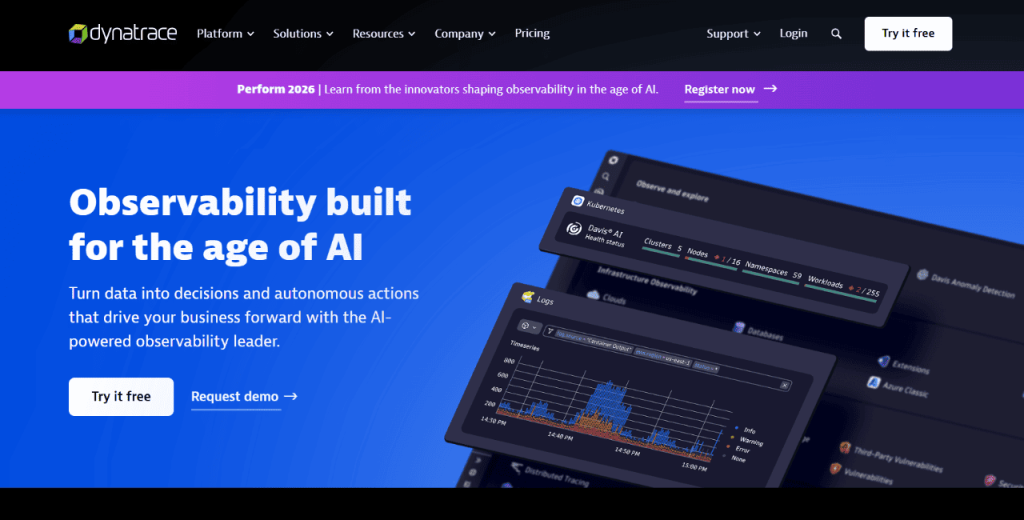
Dynatrace is an observability and AIOps platform that leans heavily into full-stack monitoring automation with an AI engine (Davis) that actually explains what’s going on instead of dumping raw data on you.
It continuously maps your entire environment, correlates signals across apps, infra, services, and user sessions, and then flags anomalies with a probable root cause in real time. From there, you can trigger automated remediation or optimization actions so the same incident doesn’t keep coming back every week.
For sales-critical systems — think heavy campaigns, big send days, or high-volume outreach — that translates into faster, more consistent performance and fewer “everything’s slow but we don’t know why” situations clogging up the pipeline.
The tools above aren’t the only ones worth your attention. Other honorable mentions include:
- Vitria: Offer real-time analytics for event processing
- InsightFinder: Focuses on root cause detection using unsupervised learning
- Moogsoft: AIOps for alert reduction and faster remediation
- OpsRamp: Offers infrastructure monitoring and service availability tracking
- ZIF (Zero Incident Framework): A no-downtime platform using predictive AIOps
The first step to making the most of your AIOps solution is knowing how it can help beef up your sales process. That’s what we’ll cover next.
How does AIOps improve sales operations in practical terms?
AIOps improves sales operations by stabilizing systems, automating routine tasks, and giving teams real-time insights.
These improvements reduce downtime and speed up decision-making. As a result, sales reps can spend their time on strategies that move the needle.
AIOps platforms can also help monitor CRMs and communication platforms in the cloud, hybrid, and on-premises environments. This end-to-end monitoring helps teams avoid downtime and resolve issues faster. It also keeps your sales pipeline moving.
AIOps use cases
AIOps’ true strength lies in automation and insight. Below are some practical AIOps use cases that show how AIOps helps sales teams work faster and more efficiently:
Lead scoring automation → With AIOps, machine learning models can automatically score leads based on engagement signals, behaviors, and fit. With such insights, sales reps know exactly who to prioritize.
Ticket creation and routing → When something breaks, AIOps tools can automatically create a support ticket and assign it to the right person. With such precision, your team can resolve problems quickly.
Anomaly alerting → AIOps can detect unusual system behavior. For instance, if a CRM slows down or email response rates drop. The system then alerts the right team before it affects sales performance.
Follow-up triggers → AIOps automation can trigger follow-ups based on actions like link clicks, opened emails, or missed meetings. The automation ensures timely, personalized outreach without human intervention.
Fast response when sales tools fail → A malfunctioning CRM or payment processing system can cost you deals. AIOps automates incident responses, helping detect such issues early, sending alerts, and escalating when needed, resulting in faster resolution times and less disruption to the sales process.
Unified views for better decisions → AIOps platforms offer dashboards and role-based views. Hence, sales reps, IT teams, and leadership can see the data that’s important to them. This unified visibility breaks down silos between departments and enables faster, data-backed decisions.
Predictive analytics use cases
One of the most powerful features of AIOps is its predictive capabilities. Below are a few use cases highlighting this potential.
Sales forecasting → AIOps solutions can analyze pipeline activity, deal velocity, and engagement trends to predict revenue outcomes. As a result, teams can set realistic goals aligned with sales targets.
Churn prediction → AIOps can track signs of disengagement or inactivity. More importantly, it can flag deals or customers that are at risk of falling through. With these insights, teams can then take steps to re-engage before it’s too late.
Capacity planning → AIOps can help leaders identify when the team or tech stack may need to scale, especially during high-volume campaigns. This prevents bottlenecks and ensures consistent performance when demand spikes.
These predictive capabilities give leaders a 360-degree view of what’s coming next. That way, they can take action before problems escalate.
How Jason AI SDR fits into sales ops
Jason AI SDR brings AIOps automation directly into outbound sales.
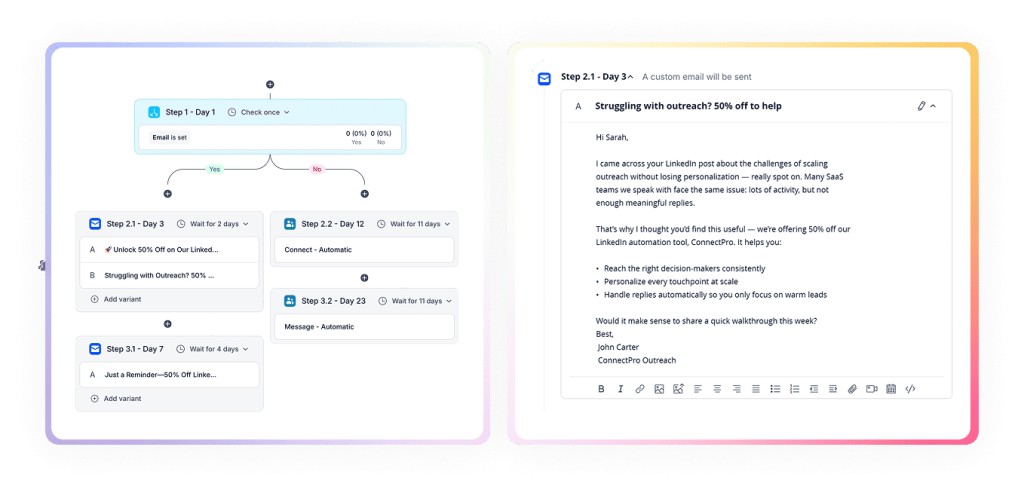
It starts with a dynamic ICP (Ideal Customer Profile). Then it uses real-time data to build personalized multichannel outreach sequences.
In addition, Jason takes care of replies and automatically books meetings based on calendar availability. It also follows approval workflows when needed for the perfect balance of AI automation and real-time oversight.
To top it all off, Jason provides real-time insights so your teams can see what’s working and optimize fast. This functionality makes Jason a powerful tool in any enterprise AIOps setup focused on driving revenue through automation.




![The Ultimate Email Deliverability Toolset for 2026 [15+ Tools]](https://test.reply.io/wp-content/uploads/deliverability-300x158.jpg "The Ultimate Email Deliverability Toolset for 2026 [15+ Tools]")