Group 2: Enterprise intent networks for ABM and in-market account discovery
2. Bombora (Best for B2B intent co-op and Company Surge)
Bombora is one of the oldest third-party intent providers, assembled from a cooperative network of thousands of B2B publisher sites.
- Intent data type: Third-party co-op data; consent-based content consumption data aggregated across many sites
- Signals/sources: Topic-level content consumption (articles, white papers, guides) on B2B publisher sites; research activity spikes relative to baseline, surfaced as Company Surge®
- Granularity: Account-level (Company Surge), not contact-level; suits ABM and account scoring
- Differentiators: Massive coverage, standardized taxonomy of topics; helps prioritize accounts based on increased interest
- Best use cases: Identifying in-market accounts for ABM, prioritizing accounts for SDR/AE outreach, increasing ROI by targeting based on actual content-consumption behavior rather than static lists
- Integrations: Compatible with many CRM/MAP/ABM tools like Demandbase, 6sense, HubSpot, and more
- Pricing: Custom pricing
Also read: How to Find Employees of a Company: Ultimate Guide
3. 6sense (Best for AI-driven multi-source intent with predictive insights)
6sense is a revenue-intelligence platform that combines multiple intent sources, first-party behavior, and predictive modeling to surface buying-stage insights.
- Intent data type: Hybrid; third-party (co-op networks), second-party partners, plus first-party website/email data if you plug it in
- Signals/sources: Anonymous website activity, third-party content consumption, keyword/topic research, account behavior, firmographics, plus enrichment from partners
- Granularity: Primarily account-level with recommended contacts
- Differentiators: Uses AI to interpret multi-source signals, predict purchase stages, prioritize outreach, and integrate with ABM workflows. Offers powerful segmentation
- Best use cases: Enterprise ABM motions; companies with longer sales cycles; those needing orchestration across marketing and sales based on intent and fit
- Integrations: Integrates with CRM, marketing automation, ad platforms, ABM tools; can ingest third-party intent partners (like co-ops) as needed
- Pricing: Custom pricing
4. Demandbase (Best for ABM + account-level intent orchestration)
Demandbase combines account intelligence, website visitor tracking, ad targeting, and third-party intent data to support full ABM workflows.
- Intent data type: Mix of first-party (site visits, CRM, marketing campaigns) and third-party web behavior/topic-level signals
- Signals/sources: Anonymous site visits, content consumption, keyword or topic research across web, enriched firmographics and intent overlays
- Granularity: Account-level (target accounts), with ability to enrich and route contacts inside those accounts
- Differentiators: Built for ABM orchestration: integrates intent with advertising, website personalization, CRM enrichment, and campaign activation. Broad global coverage and multi-language support for large enterprise GTM
- Best use cases: Enterprise ABM, account-based advertising, renewal/upsell campaigns, global GTM teams balancing multiple markets
- Integrations: Deep integrations with ad platforms, CRMs, marketing automation, ABM tools; flexible for global teams
- Pricing notes: Custom pricing
Also read: Step-by-Step Guide to Targeted Selling Using Reply.io
Group 3: Sales-intelligence platforms with intent-driven prospecting
5. ZoomInfo (SalesOS with streaming intent and data enrichment)
ZoomInfo is a widely used B2B data and intent provider that combines firmographic databases with real-time behavioral signals.
- Intent data type: Third-party co-op/modeled intent signals plus first-party engagement inside the ZoomInfo ecosystem
- Signals/sources: Website visits, content consumption across monitored properties, Scoops from surveys and interviews, streaming intent that tracks interest over time, and contact or company enrichment
- Granularity: Account-level intent, but with deep contact graph (contacts, roles, hierarchy) for outreach
- Differentiators: Combines intent scoring with a contact database and firmographic enrichment; good for outbound and inbound both. Streaming intent enables real-time reaction to shifting buyer behaviors
- Best use cases: Global outbound, enrichment-driven outreach, accounts with rising intent where contact data is needed immediately
- Integrations: Works with major CRMs, sales and engagement tools; and fits into broad GTM stacks
- Pricing: Custom pricing
6. Cognism (Best for Europe-centric data + intent blend)
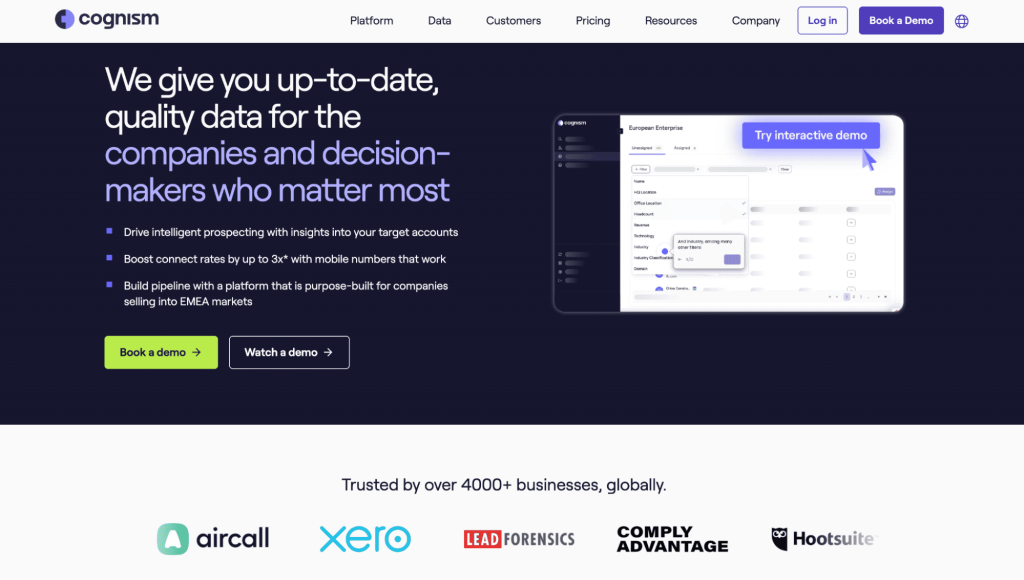
Cognism provides firmographic and contact data (especially strong in Europe) and layers in third-party intent signals.
- Intent data type: Third-party co-op (e.g. Bombora) plus firmographic data and enrichment
- Signals/sources: Company-level intent (topic interest), technographic or firmographic data, business triggers (funding, job changes), enriched contacts
- Granularity: Account-level intent + contact-level data for outreach
- Differentiators: GDPR and privacy compliant, strong European contact coverage, combined dataset avoids need for stitching multiple vendors
- Best use cases: European GTM, compliance-conscious teams, firms needing both contact data and intent without large ABM platform overhead
- Integrations: CRM and enrichment workflows typical of sales-intelligence tools; syncs to Salesforce and HubSpot
- Pricing: Custom pricing
7. Apollo.io (Best for prospecting + intent filters for outbound)
Apollo combines a large B2B contact database with intent-like signals aggregated from web behavior and social data.
- Intent data type: Third-party web signals + internal enrichment + outbound engagement data
- Signals/sources: Public web behavior, social signals, company data, plus email/campaign engagement inside Apollo
- Granularity: Account-level intent with contact-level for outreach
- Differentiators: Intent data baked into the prospecting UI; outbound teams can filter lists by high-buying-intent before starting sequences
- Best use cases: High-volume outbound, SDR-led prospecting where intent is a filter rather than a full ABM system
- Integrations: Sync into CRM, sequences, email/LinkedIn workflows; works as a standalone sales stack or part of a larger one
- Pricing: Free plan available; paid plans start from $49/month per user
8. Seamless.ai (Best for sales intelligence + light intent overlay)
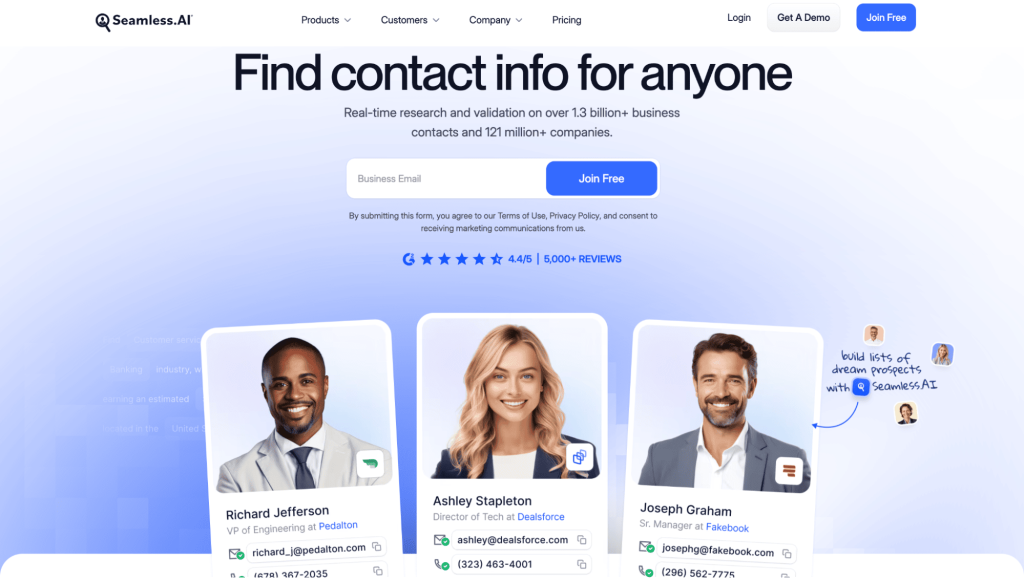
Seamless.ai is a contact- and company-data provider with an add-on “Buyer Intent” module overlaying web behavior signals on top of its contact database.
- Intent data type: Third-party web behavior, internal enrichment, and optional first-party data if used in workflow
- Signals/sources: Public web behavior, business signals (news, firmographic changes), engagement triggers where available
- Granularity: Contact-level with account context
- Differentiators: Good for teams that want basic intent overlays without a full ABM or intent-stack investment; simpler interface, faster setup
- Best use cases: Smaller to mid-market sales orgs doing outbound and wanting extra signal and warm leads before outreach
- Integrations: Standard CRM export, enrichment workflows, email/Dialer tools
- Pricing: Free plan available; paid plans offer custom pricing
Group 4: Review-driven buyer intent from software and research marketplaces
9. G2 Buyer Intent (Best for review-site second-party signals for software buyers)
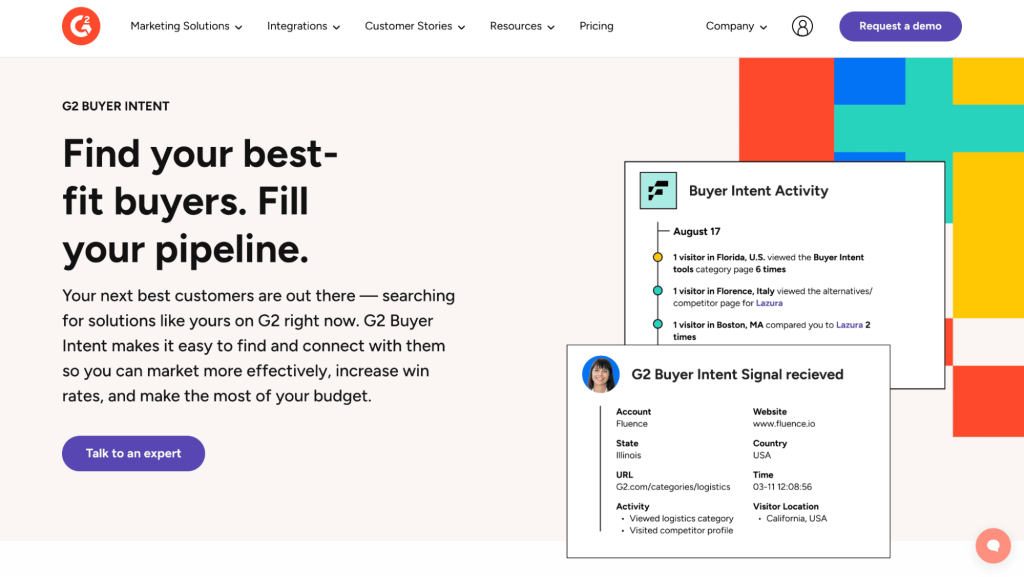
G2 tracks user behavior on its software review and comparison platform: which companies are researching tools, comparing alternatives, and evaluating vendors.
- Intent data type: Second-party (from G2’s own property); aggregated intent based on buyer behavior on G2
- Signals/sources: Visits to vendor profiles, category browsing, competitor comparisons, review reading, product vs. product comparisons
- Granularity: Account-level (companies researching your product or similar tools), contact info when buyer opts in (lead forms)
- Differentiators: Great for SaaS vendors whose prospects rely on review sites before purchase
- Best use cases: SaaS vendors, competitive displacement plays, nurturing lower-funnel accounts who are evaluating solutions
- Integrations: CRM and marketing automation integrations; alerts and workflows linked to G2 intent triggers
- Pricing: Custom pricing
10. TrustRadius (Best for review-site downstream intent for technology buyers)
TrustRadius is another B2B review and research platform. As buyers interact with vendor/product content or compare tools, TrustRadius surfaces those signals as buyer intent.
- Intent data type: Second-party (from TrustRadius’ own site traffic and activity)
- Signals/sources: Product page views, category exploration, comparison pages, long-form reviews, and research content engagement
- Granularity: Account-level signals; contact-level when buyers submit forms or engage with lead-capture flows
- Differentiators: Good for mid-market and enterprise tech vendors, especially those selling into verticals where buyers research features deeply before purchase. Complements co-op intent with buyer-attribution intent
- Best use cases: SaaS/tech vendors, renewal or competitive displacement, buyers who rely on in-depth reviews before committing
- Integrations: CRM/ABM workflows; often used in concert with other intent providers
- Pricing: The vendor package starts from $30,000 per year per product
11. Informa TechTarget (Best for IT-vendor focused in-market buyer signals)
TechTarget aggregates IT-buyer behavior across its content network. It delivers in-market account lists to vendors targeting tech and enterprise buyers.
- Intent data type: Third-party content consumption plus first-party (on TechTarget network)
- Signals / sources: Content engagement on research whitepapers, vendor comparison pages, product evaluations, downloads, content reading behavior by registered IT professionals
- Granularity: Account-level
- Differentiators: Specialized for tech buyers; particularly useful if your product serves IT, security, dev teams, or enterprise infrastructure. Regular feed cadence and domain-specific depth
- Best use cases: Tech or SaaS vendors targeting enterprise IT buyers, long sales cycles, high consideration products requiring deep research
- Integrations: Integrates as account-intent feeds into CRM/ABM tools/marketing automation
- Pricing: Custom pricing
How can sales reps use intent data effectively?
Use intent signals to build a smarter daily plan
Instead of working through a static list, reps can let intent shape who gets attention first.
If an account is reading comparison pages, running category searches, or returning to product content, that’s a sign they’re moving.
Start your day by filtering for these accounts.
You’ll have a higher chance of increasing reply rates because you’re reaching out when curiosity is already active.
Shape your outreach around what prospects are exploring
Intent data removes a lot of the guessing in cold messages.
If the signal shows interest in a specific topic, pain point, or competitor, use that as the anchor for your opener.
Contact-level intent (like ad engagement or page views from a named user) helps you speak directly to the person who engaged.
It makes outreach feel tailored rather than template-driven.
For example: if the buyer is reading “How to replace X tool,” your email can acknowledge that and introduce a cleaner alternative.
Build tighter ABM segments and warm accounts before outreach
Intent data is one of the easiest ways to make ABM feel actionable.
You can group accounts based on the topics they’re researching and run personalized ads or nurture sequences before an SDR steps in.
When the account finally reaches your pipeline, the buying group already recognizes the problem and category.
This strategy works best when intent flows into Salesforce, HubSpot, Marketo, Outreach, or Salesloft so reps see the signal at the moment they’re planning their next step.
Add intent to qualification so you don’t chase the wrong accounts
Surge scores, category research, review behavior, and solution-level keywords can all feed into your scoring model.
It helps reps understand which accounts are warming up and which ones need more time.
That way you can reduce wasted effort and nudge reps toward opportunities that are genuinely moving.
Watch for intent changes to protect deals and reduce churn
Intent isn’t just for top-of-funnel.
If an active deal suddenly shows interest in competitors, that’s a red flag.
If a customer starts researching problems your product solves, it may signal a renewal risk.
These shifts give reps a chance to intervene earlier with the right conversation.
Bring intent into the tools reps already use
The biggest wins come when intent is easy to act on.
Signals should appear where reps live: CRM, sales engagement, or Slack.
If reps can see what a buyer is exploring at the exact moment they write a message or build a cadence, they’ll use the insight naturally without extra training.




![The Ultimate Email Deliverability Toolset for 2026 [15+ Tools]](https://test.reply.io/wp-content/uploads/deliverability-300x158.jpg "The Ultimate Email Deliverability Toolset for 2026 [15+ Tools]")