Apollo.io
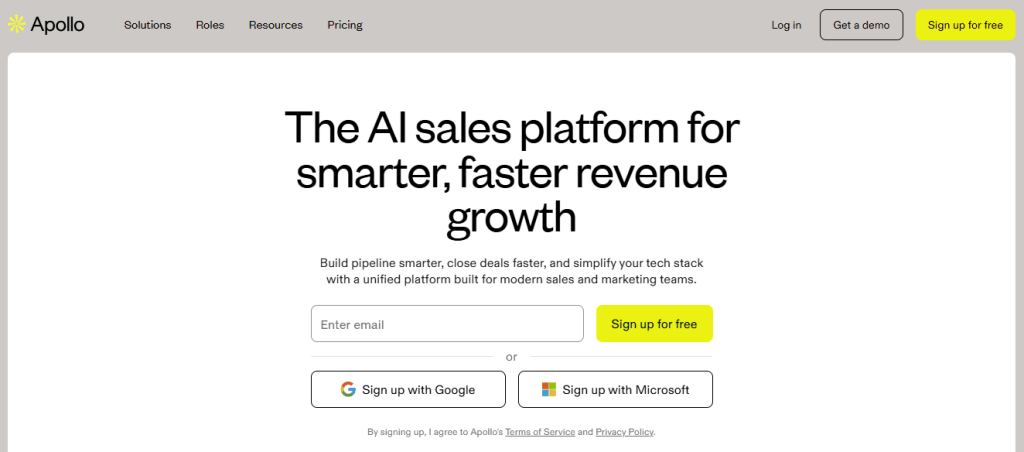
Apollo is a sales intelligence platform that gives you access to over 200 million contacts with detailed demographic and firmographic information.
It handles both inbound and outbound really well. The visitor tracking feature reveals which companies are checking out your website, even before they fill out a form. So instead of waiting for someone to convert and then scrambling to follow up, you can see the anonymous traffic, identify the company, and let the AI surface key decision-makers at that account.
Apollo also enriches form fills automatically, which solves a common conversion problem. Long forms kill conversion rates, and short forms also leave you with incomplete data that’s hard to route or qualify. But with Apollo, someone can fill out just their email, and the system auto-fills the job title, company size, industry, and tech stack.
Apollo also gives your reps a prioritized daily action list powered by AI, so they start each day knowing exactly which leads are hottest and what actions will move them forward.
One thing to note, though, is that Apollo’s contact data can sometimes be inaccurate, missing, or outdated. For example, here’s how one customer puts it: “Some of the data can be slightly outdated, so I’ve occasionally had to verify contacts manually.”
Pricing:
- Free plan
- Basic plan – $59/month/user
- Professional – $99/month/user
- Organization – $149/month/user
ZoomInfo
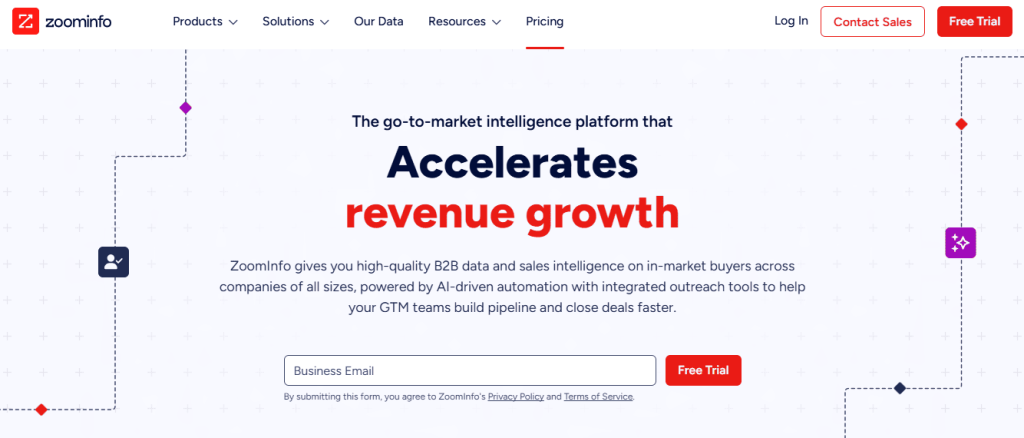
ZoomInfo is known for its rich B2B contact data. You get professional profiles with job responsibilities, work experience, education, social media links, and even department org charts that show you exactly who reports to whom. So when you’re selling into complex organizations where multiple stakeholders need to sign off, you can map the entire buying committee before you even make contact.
You can combine over 300 company attributes to slice your addressable market exactly how you need it, either by revenue, employee count, tech stack, funding stage, location, or dozens of other filters.
You can also layer in HubSpot data and engagement filters to find accounts that match your ICP and are already showing signs of interest.
ZoomInfo differentiates itself with its intent data. The platform tracks buying signals from over 210 million IP-to-organization pairings and 6 trillion keyword-to-device pairings sourced monthly from more than 90% of accessible devices across the US. What this means in practice is that ZoomInfo can tell you when companies are actively researching topics related to your product, even if they’ve never visited your website.
Pricing:
ZoomInfo pricing isn’t publicly disclosed, but after some extensive digging, it’s clear that it is expensive, especially for smaller teams. Plans typically start around $15,000 per year and scale up quickly based on users and credits.
LinkedIn Sales Navigator
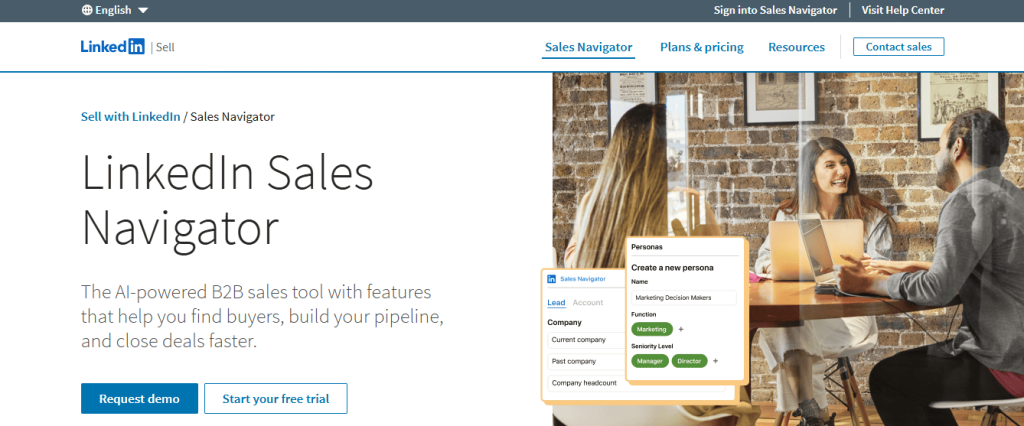
LinkedIn Sales Navigator is built specifically for social prospecting, and if your buyers are active on LinkedIn, which most B2B decision-makers are, it’s one of the best ways to find them.
You can save leads and accounts you’re targeting, and the platform sends you alerts when something meaningful changes, such as a job move, a role change, or when they engage with your content or LinkedIn ads. With a dedicated LinkedIn and HubSpot integration, all this data will be synced in real time so sales reps always work with the latest information, leading to more relevant outreach.
One thing to understand is that Sales Navigator gives you InMail credits to message people outside your network. But those credits run out quickly if you’re doing high-volume outreach, so it works best as part of a broader multichannel strategy rather than your only outreach channel.
Pricing:
- Core – $99.99/month
- Advanced – $149.99/month
- Advanced plus – custom pricing (this is the only plan that supports CRM synchronization)
Cognism
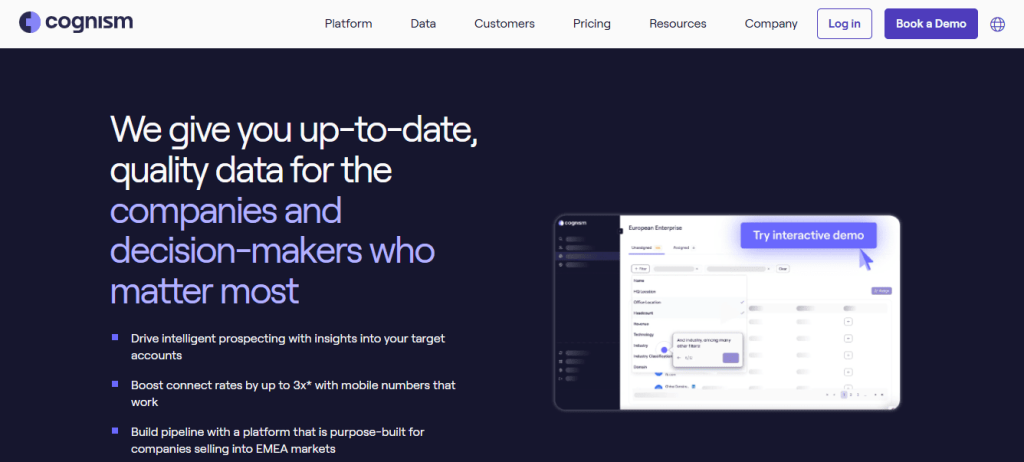
Cognism is a sales intelligence platform known for its extensive B2B contact data with a focus on compliance. Its Diamond Data feature gives you phone-verified mobile numbers that deliver higher connection rates compared to standard contact databases. This matters because you’re getting direct mobile numbers that actually connect you to decision-makers.
Cognism also handles the research work that normally eats up hours before calls. The ICP fit check uses AI to instantly tell you whether a company matches your ICP with a one-click summary.
As for data enrichment, it lets you upload your current contacts and automatically fill in missing information. The API gives you direct access to their data engine, so you can build custom workflows that auto-enrich inbound leads, update HubSpot CRM records, or embed contact data directly into your product.
Pricing:
Cognism has two pricing plans, Grow and Elevate. The Grow plan gives you just the contact data, while the Elevate plan gives you premium contact data with intent signals. You’d have to contact the sales team, though, for the exact pricing structure.
Dealfront
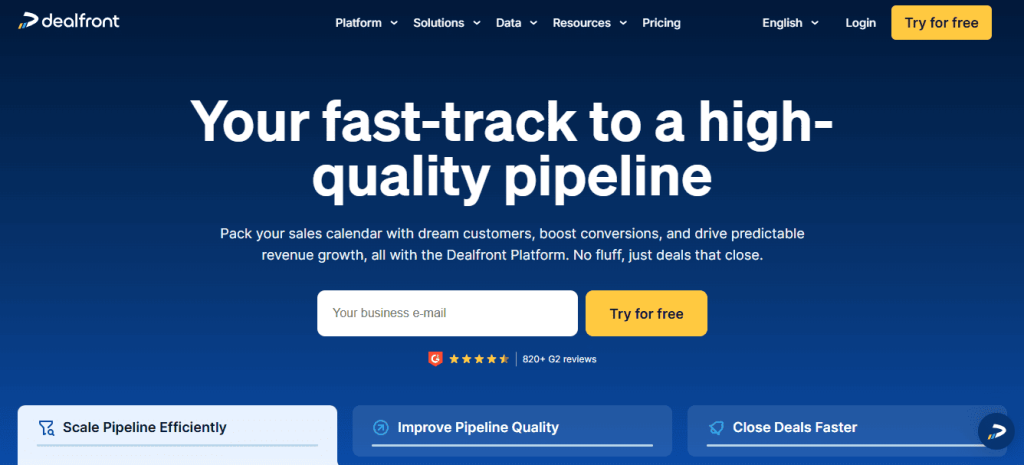
Dealfront is a go-to-market (GTM) platform designed to discover and qualify leads. The platform combines two key capabilities:
This combination means you can both find new prospects proactively and identify companies already showing interest by visiting your site.
Target by Dealfront gives you access to Europe’s largest B2B database with compliance built in for GDPR and local privacy regulations. But what makes it useful is the lookalike feature. You can upload your existing customer list, and Target automatically segments them to find similar companies that match those patterns.
Leadfeeder, on the other hand, identifies anonymous companies visiting your site. Its ICP insights then show you which of these website visitors actually match your ICP. You can see how your traffic splits across ICP segments, which tells you whether your marketing is attracting the right audience. You can also identify which channels bring in the most ICP-fit visitors.
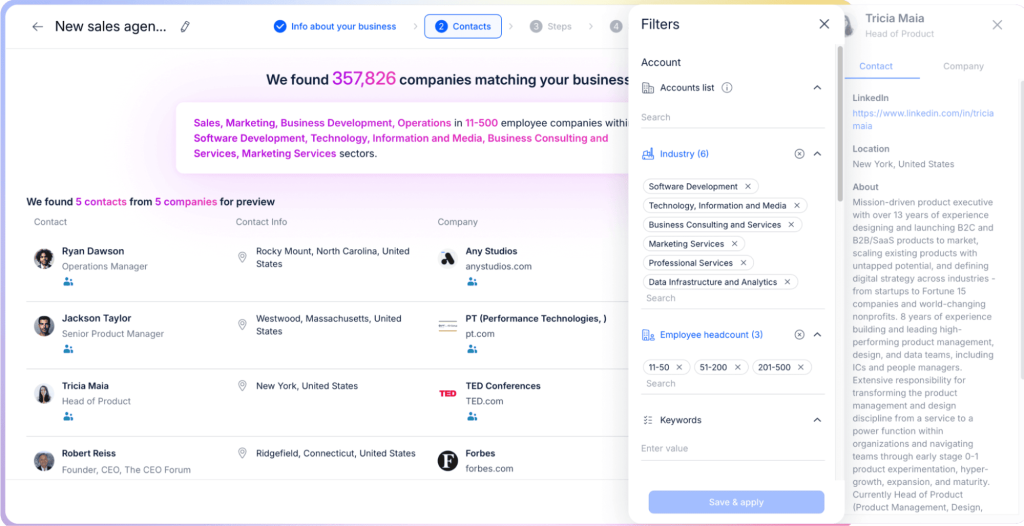
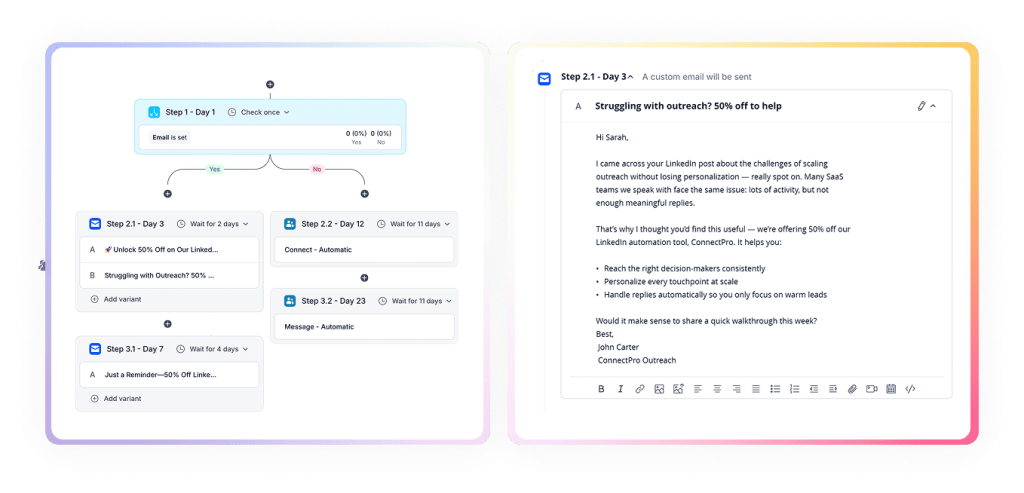
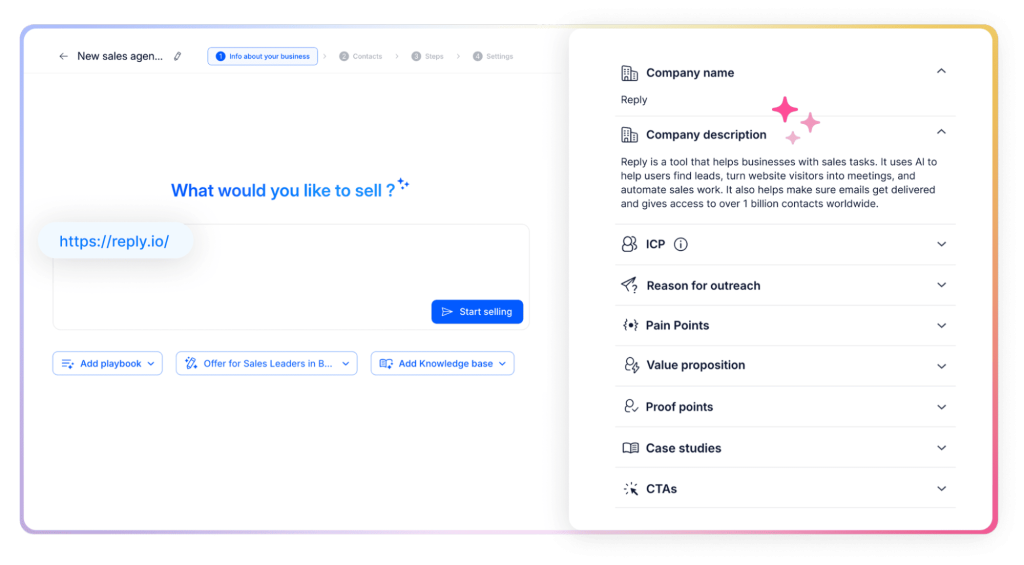
One limitation is that Dealfront is more focused on data and insights than on outreach automation. It’s excellent at telling you who to reach out to and when, but you’ll need another tool like Reply.io (which not only focuses on data but also outreach) to actually run multichannel sequences.
Pricing:
Dealfront’s pricing depends on your needs, so you’ll have to contact sales for a custom quote. Leadfeeder has a free plan, and its paid plan starts at $99/month.
Lemlist
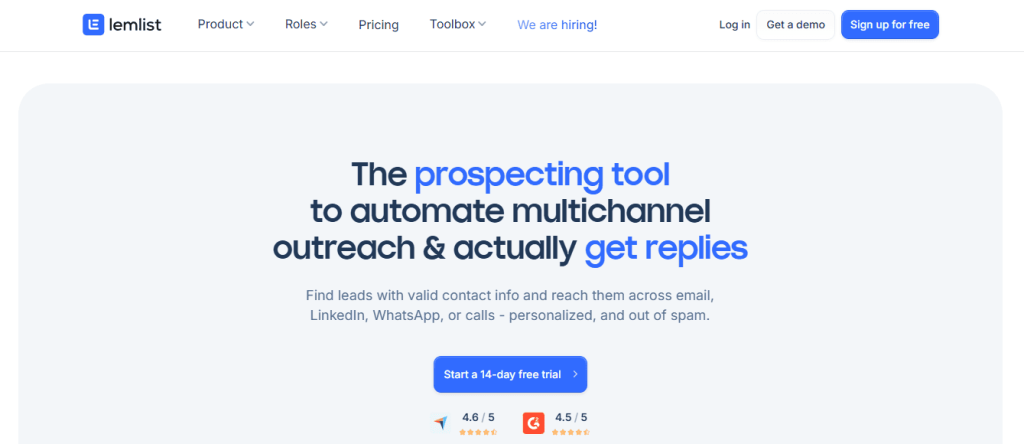
Lemlist is a sales engagement platform that helps you find leads and automate multichannel outreach campaigns.
Its database lets you find decision-makers at target companies using filters like tech stack, funding, revenue, and other firmographic criteria. What makes it different though is its waterfall enrichment approach. Instead of relying on a single data provider, which might have gaps, Lemlist checks eight premium data sources sequentially. So if the first provider can’t find a verified email, it automatically moves to the next one, then the next, until it finds a match.
Its multichannel sequences combine email, LinkedIn actions, and phone calls in one automated workflow, just like with Reply.io. You can set up campaigns where lemlist sends an email, waits a few days, then automatically visits the prospect’s LinkedIn profile, sends a connection request if they don’t respond, and schedules a call reminder if they engage but don’t book a meeting.
Pricing:
- Email pro – $69/month/user
- Multichannel expert – $99/month/user
- Enterprise – contact sales
AI is everywhere, and it saves time across the sales process, so it’s worth understanding what it can actually do well. However, over-relying on AI can make your outreach feel generic, so it should augment your team’s judgment, not replace it.
Lead scoring and prioritization
AI can analyze several signals your reps would otherwise miss because there’s too much data to process manually and predict which leads are most likely to convert.
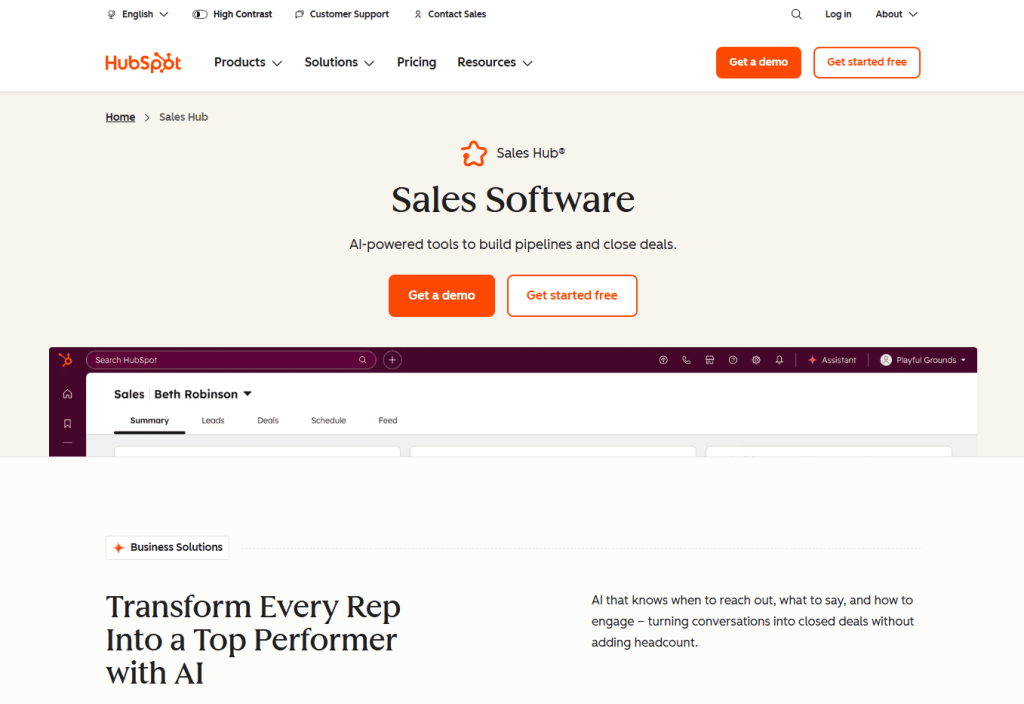
Tools like HubSpot’s predictive lead scoring, Apollo’s intent data, and ZoomInfo’s buyer intent all use AI to rank prospects based on likelihood to engage. The benefit is focus. Instead of your team working through a giant list alphabetically, they start with the prospects showing the strongest signals right now.
But AI needs good data to make good predictions. If your CRM is messy, your lead scoring will be unreliable. And AI can’t account for context your reps know but isn’t in the system like a warm referral or a recent conversation at an event. Therefore, use AI scoring as a starting point, not the final word.
Conversation analysis and coaching
AI can listen to sales calls, read email threads, and analyze what’s working and what isn’t. It can flag when reps aren’t asking discovery questions, when they’re talking too much, or when they’re not addressing objections. This kind of conversation intelligence used to require managers to listen to hours of calls. Now AI can do the first pass and highlight what’s worth reviewing.
Tools like Reply.io integrate conversation analysis through its AI, which can review email replies and adjust follow-up messaging based on sentiment and engagement.
Email writing
This is where AI has made the biggest practical impact. AI can now research a prospect, pull relevant information such as company news, job changes, pain points, and draft an email that feels personalized within seconds.
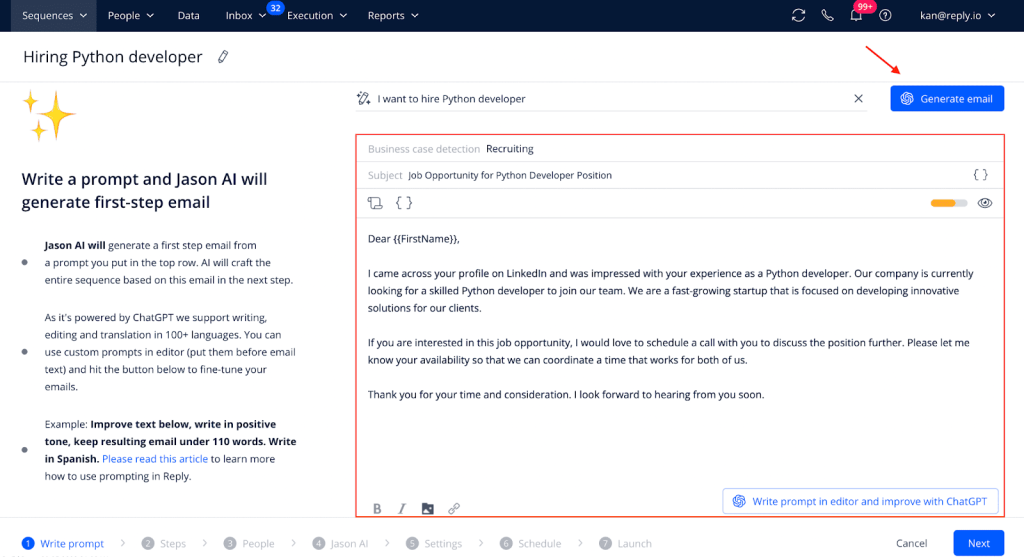
Tools like HubSpot’s AI email writer and Jason AI all do versions of this. The how is straightforward: the AI scrapes data about the prospect and their company, identifies talking points, and generates messaging that references those details.





![The Ultimate Email Deliverability Toolset for 2026 [15+ Tools]](https://test.reply.io/wp-content/uploads/deliverability-300x158.jpg "The Ultimate Email Deliverability Toolset for 2026 [15+ Tools]")